
[intro]In this guide, you’ll learn how to use the Backlink Opportunities area of your EKM SEO account and how to utilise email outreach to improve your backlink strategy and link equity. [/intro]
[summary]
[/summary]
Using different strategies to build high-quality backlinks is important because every strategy has its advantages and disadvantages. Therefore, it is important to choose a few different strategies to implement rather than just one, so you can ensure a natural and diverse backlink profile is built over time for your EKM online shop.
Not every backlink strategy will suit everyone, but it’s equally important to test as many as possible to see which one works best for your specific needs. Strategies give you a blueprint as to how best to plan actions to achieve a specific outcome, in this case getting high-quality, high authority, trustworthy backlinks.
Email outreach remains a valuable strategy for building links, forming partnerships and gaining visibility within your industry. Its effectiveness depends not on volume, but on relevance, clarity and professionalism. By defining your goals, targeting the right contacts, personalising your emails and keeping your messaging concise, you can significantly improve your response rates and create meaningful business opportunities.
[tips] The more competitors you add to your EKM SEO account, the more data you can work with when discovering competitor backlinks. You can see your competitors by following the steps in this guide. [/tips]
What is Link Equity?
Link equity can be seen as the reputation and influence a website gains through backlinks from other sites. These links act like upvotes, boosting your site's credibility in the eyes of search engines. By grasping how link equity flows through the internet, you gain insight into enhancing your EKM online shop’s visibility and ranking potential.
Essentially, the more quality backlinks you have, the higher your link equity will be. This means search engines like Google will view your EKM online shop as more authoritative and trustworthy. Assessing authority is one of the key factors that influence link equity. Websites with high authority passing links can significantly boost authority and credibility. On the other hand, low-quality or spammy backlinks can harm link equity and SEO efforts. There are two popular metrics for measuring authority: Domain Authority and Page Authority.
What is Domain Authority?
This is a metric that predicts how well a website will rank in search engine results. Those with higher scores on the platform indicate a greater ability to rank. The domain authority scale on the platform goes from 1 to 10, with 10 being the highest domain authority score.
A backlink from a domain with high domain authority is generally considered valuable because it can potentially improve the ranking and visibility of the linked website in search engines. 'Bad' websites, in most cases, have a low SEO score, though not all websites with a low score are necessarily bad.
Locating the Page
1. From the dashboard, click Backlinks, and select Competitor Opportunities from the drop-down menu:
2. You’ll then see this page. It will load on a default ‘all’ view, so the figures in the table are a combination of the data from all your competitors: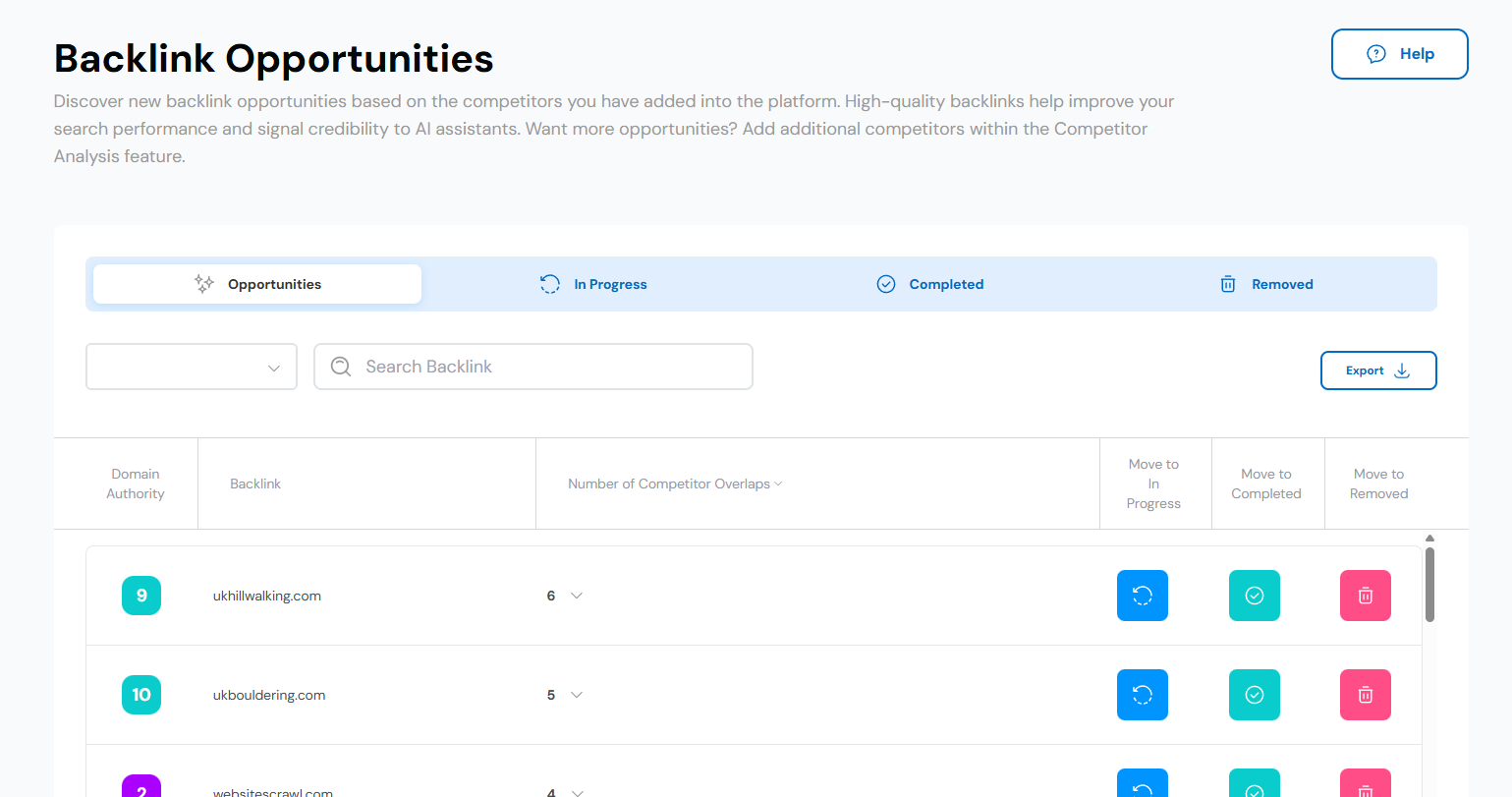
3. Near the top of the page, you have a drop-down menu on the far left-hand side. You can use this to select one of your competitors. Next to this is a search bar for you to search for a specific backlink, and to the far right-hand side, there’s an Export button for you to download this information to a spreadsheet for further analysis:
4. Looking at the table below this, you’ll notice that each referring domain is listed with its domain authority score, and after this, you’ll see the Number of Competitor Overlaps. Click the down arrow symbol next to the number: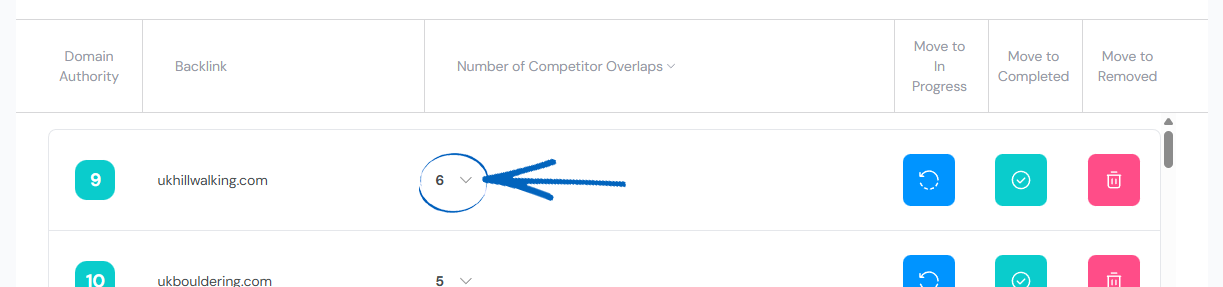
5. This will reveal the number of backlinks your competitors have from that specific domain. You can click each URL to view the link in a separate browser tab: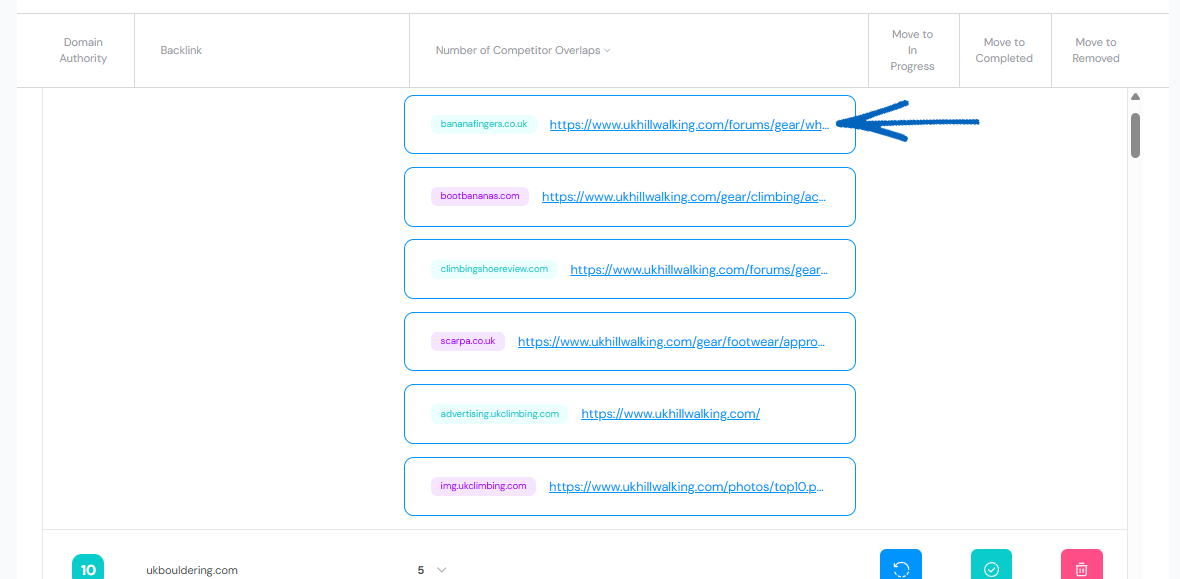
6. If you would also like to get a backlink on that domain like your competitors have, your first step is to click the blue button on the top right-hand side, which will move this domain onto the In Progress tab: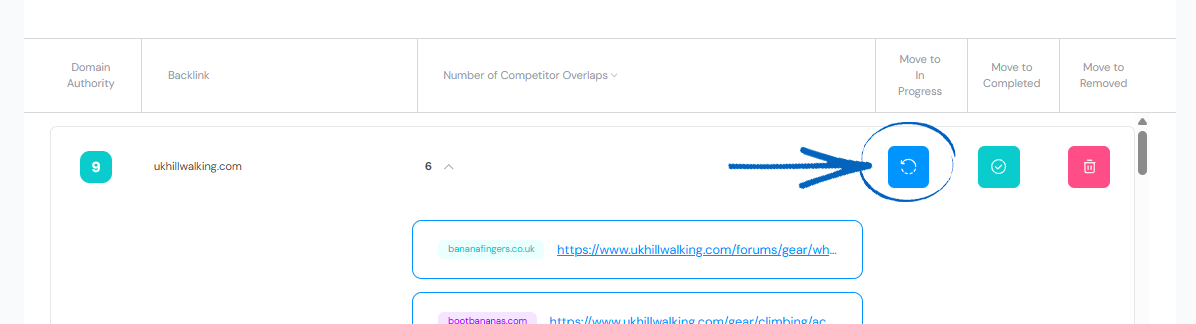
Repeat this process with a few more of these opportunities, but don’t be tempted to sort through all of them at once – four or five is a good number to begin with.
Removing Backlink Opportunities
7. When sorting through the backlinks, look for high-quality websites, where a backlink to your own EKM online shop would be beneficial. Whilst a low domain authority score is not necessarily the mark of a low-quality website, very often it can be. Copy and paste the URL of the main backlink website into a separate browser tab: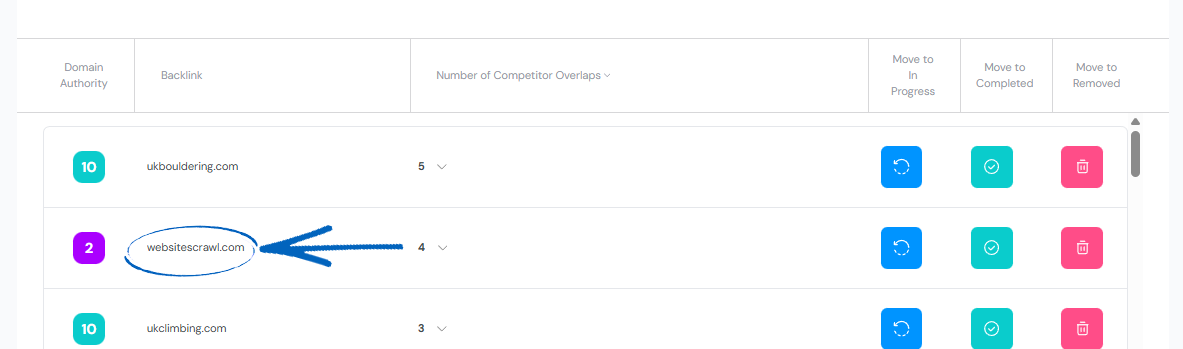
8. This will allow you to view the backlink website yourself and decide whether a backlink to your own EKM online shop from here would be beneficial. If it is not a high-quality website that your potential customers might visit, you can move this backlink to the Removed tab by clicking the pink button on the right-hand side: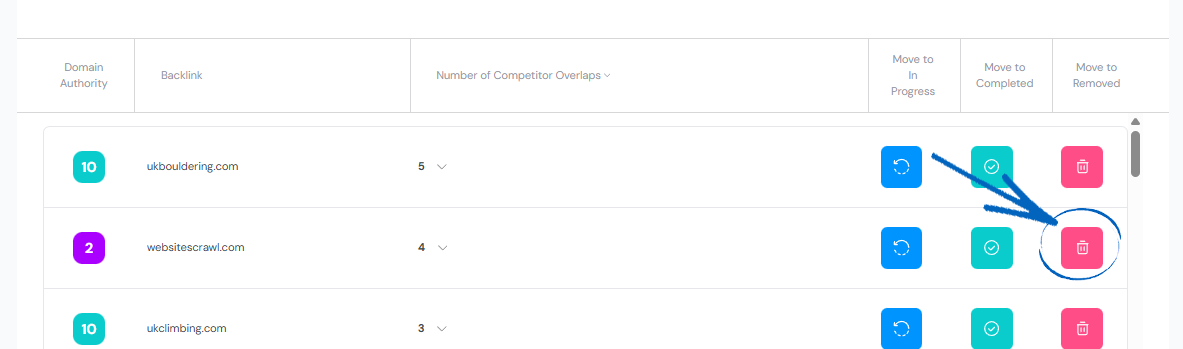
Managing In Progress Opportunities
When you have worked through some backlinks and moved some of them into different lists, scroll to the top the page and click the In Progress tab: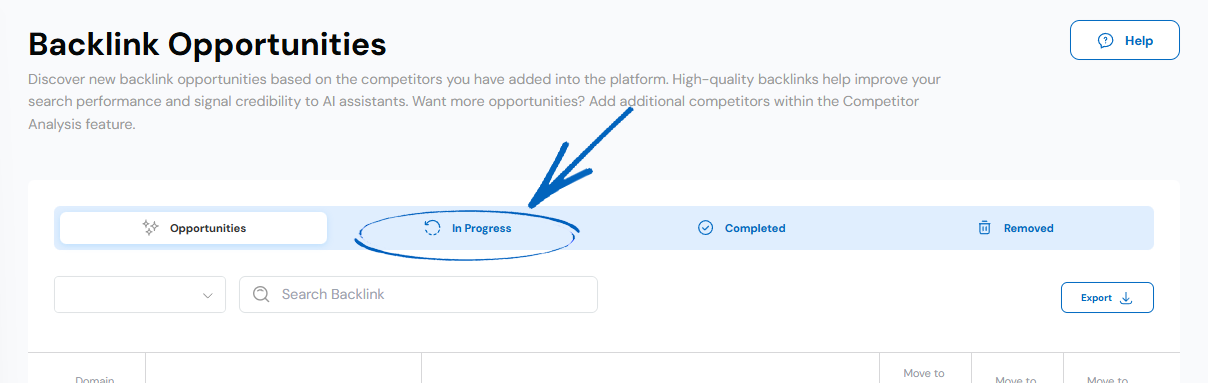
Here you’ll see of all your chosen backlinks. On the right-hand side there are three buttons to move the backlink to a different tab if necessary: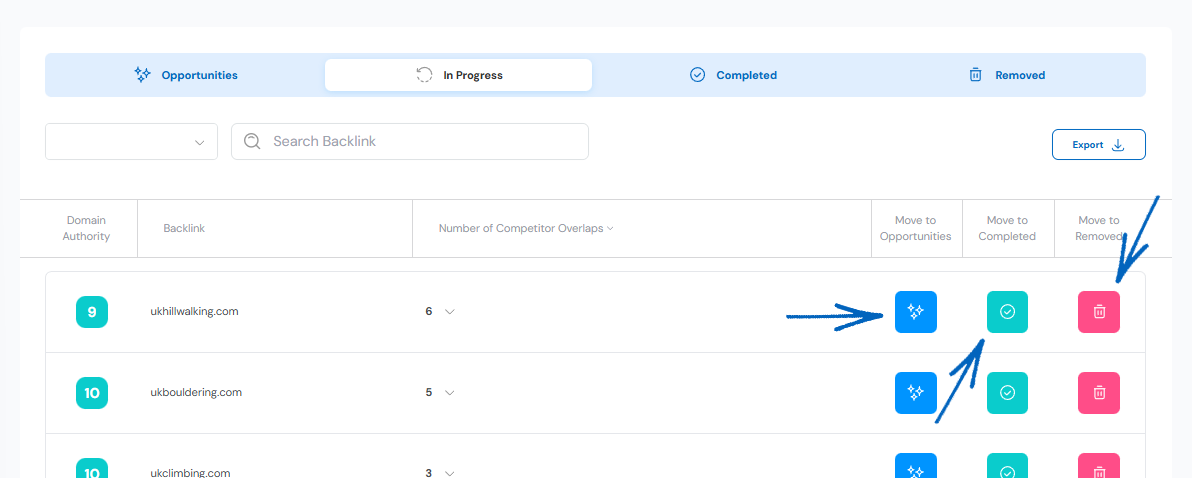
What Is Email Outreach?
Email outreach is the process of contacting individuals or businesses directly by email with a specific purpose. Within content marketing, this is typically done to promote a piece of content, request a backlink, introduce a partnership opportunity or begin a collaboration with an influencer or journalist.
At its core, outreach is about starting meaningful conversations. Rather than sending mass promotional emails, effective outreach focuses on connecting with the right people in a relevant and valuable way.
Why Is Email Outreach Important?
Most people have received poorly written outreach emails. They’re often generic, irrelevant or clearly copied and pasted. As a result, it’s easy to question whether email outreach is still effective. The short answer is yes - email outreach still works.
However, it only works when done correctly. Sending large volumes of low-quality emails will not produce results. To generate replies, your outreach emails must feel genuine, relevant and beneficial to the recipient. They should clearly explain why you’re getting in touch and what value you can offer.
When approached properly, outreach remains one of the most effective ways to build links and increase brand visibility. Many link-building strategies rely on contacting website owners directly. Outreach also helps you build long-term relationships within your industry, which can lead to partnerships, guest blogging opportunities, interviews and collaborative projects. In some cases, highly targeted outreach to journalists can even result in press coverage.
11. Your next step is to work through each backlink one-by-one. Highlight the backlink URL and open it in a separate browser tab. You should also click the down arrow to reveal the competitor overlaps and look at how your competitors have been able to gain a backlink from this website: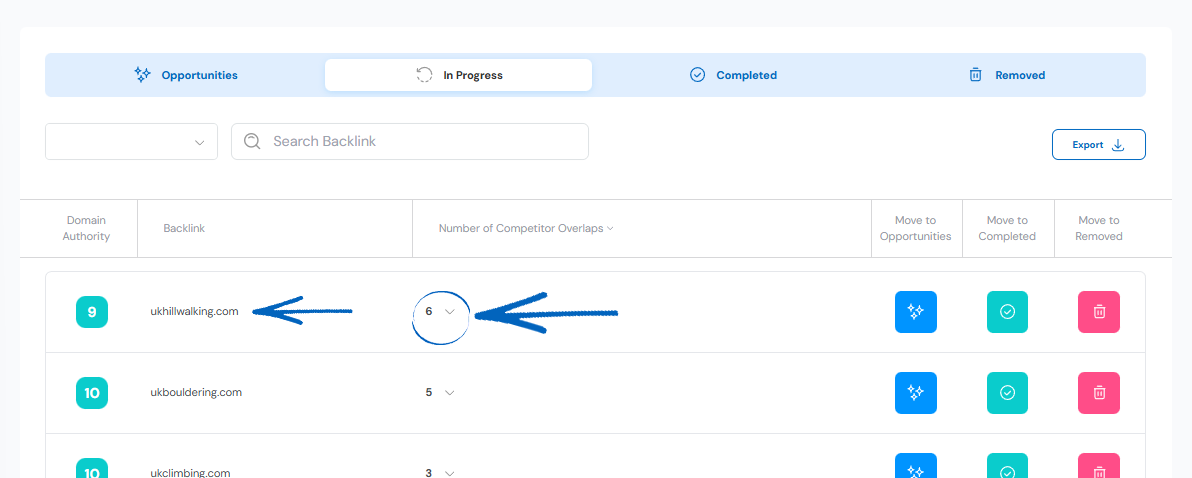
What you are looking for at this point is what format the main website is, and for any contact details – ideally an email address – that you can see to request a backlink, based how your competitors have. For example, if the backlink website is a:
Blog – Find out who the main blog post authors are and see if they have an email address on their author profile. You can contact them via this to request a backlink, and if applicable, offer them a free sample so they can test out your products themselves.
Reviews Site – Look for a submission email and for any guidelines for submitting one of your products for review. You could even offer a discount code in an outreach email to the owner to encourage them to try your product.
Ecommerce Website – If your competitors also have products retailed by this online store, perhaps this is something you can achieve too? Look through the website to try and find an email address for the buyer of that company to see if you can get one or more or your products stocked there too.
You may find this process easy to organise by using a spreadsheet to list the backlink website, website type and contact email address as you work through your chosen backlinks.
[tips] You don’t necessarily have to email the generic info@ or sales@ email addresses if these are the only contact details you can see on the backlink website as email sent to these addresses are often ignored. Instead, look for email addresses that include the names of specific individuals, teams or departments. [/tips]
Best Practices for Email Outreach
1. Define Your Goal Before You Start
Before building a contact list or drafting an email, you should be clear about what you want to achieve. Outreach without a defined objective often leads to unfocused messaging and low response rates. If your goal is press coverage, you should be identifying journalists who regularly write about your industry. If you’re aiming to build backlinks, you may want to contact websites that have linked to similar content in the past. If you’re seeking partnerships, you should focus on relevant businesses or influencers within your niche. Having a clearly defined goal ensures that every email you send has purpose and direction.
[tips] Before you send a ‘cold’ email, double check that your email signature is up-to-date and includes your contact details, links to your EKM online shop and any social media profiles you have created for your brand. Also check that your social media profiles - if you have any – are displaying recent posts, contact details which match your email signature and that you have consistent branding across each of your platforms which matches that of your EKM online shop. [/tips]
2. Build a Targeted Contact List
One of the most important steps in outreach is ensuring that you are contacting the right people. Although this sounds straightforward, many outreach emails are sent to the wrong recipient or lack any real relevance.
Create a structured spreadsheet to organise your outreach activity. This should include the contact’s name, website, direct email address, the reason you are contacting them and any relevant URLs. Including a status column can help you track whether the email has been sent and whether a response has been received. Taking the time to build a well-researched list significantly increases your chances of success.
3. Find Direct Email Addresses
Whenever possible, you should email a specific individual rather than a generic inbox. Messages sent to addresses such as info@ or admin@ are far less likely to receive attention. A direct email address makes your message more personal and increases the likelihood that it will be read and considered. Accuracy is essential at this stage, so ensure names and email addresses are correct before sending.
4. Develop and Refine Your Templates
If you plan to send outreach emails regularly, creating templates can help maintain consistency and save time. However, templates should be used as a foundation rather than copied word for word.
Start by reviewing example outreach emails for inspiration. Once you understand the structure, rewrite the template in your own tone of voice. Keep the message concise and focused, and pay particular attention to the subject line, as this will influence whether your email is opened. It’s also advisable to create at least two variations of your template. Testing different versions allows you to identify which messaging generates better response rates.
5. Personalise Every Email
Personalisation is one of the most important factors in successful outreach. Generic emails are often ignored, while tailored messages are far more likely to receive a response.
Begin by addressing the recipient by name. Referencing a recent article they’ve written, a project they’ve worked on or something specific about their website demonstrates that you have taken the time to research them. Where appropriate, you may include a genuine compliment, provided it feels natural rather than forced.
For high-value contacts, consider engaging with their content before sending your outreach email. Commenting on blog posts or sharing their work can make your message feel more familiar when it arrives in their inbox.
6. Keep Your Email Concise and Clear
The people you are contacting are often busy professionals. Long, unfocused emails can quickly lose their attention.
Your message should introduce the purpose of your email early on. This is sometimes referred to as the inverted pyramid approach, where the most important information appears at the beginning, followed by supporting details.
At the same time, avoid being too brief. A one-sentence email that asks for a call without providing context rarely performs well. Instead, provide a short summary of your idea so the recipient can quickly determine whether it is relevant to them.
7. Follow Up Responsibly
If you do not receive a response, it is acceptable to send one follow-up email. This should be polite, concise and ideally introduce new information or a slightly different angle. Repeated follow-ups can harm your credibility and may discourage future engagement. Limiting yourself to a single, well-considered follow-up helps maintain professionalism.
8. Use Outreach Tools Carefully
Email outreach tools can help you organise campaigns, track responses and automate follow-ups. They are particularly useful when managing larger volumes of outreach. However, if you are new to outreach, it can be beneficial to send emails manually at first. This allows you to understand how recipients respond and refine your messaging before introducing automation. Adding professional details to your email signature, such as links to LinkedIn or your Google Business Profile, can also improve credibility and encourage replies.
12. When you have received responses from your outreach emails, you can then return to the Backlink Opportunities page and sort the backlinks into relevant tabs. For positive responses, click the Move To Completed button for the backlink URL. For negative responses, you can click Move To Remove. However, if there’s no response after 28 days, perhaps click Move To Opportunities to remind yourself to revisit that backlink website at some point later in the future: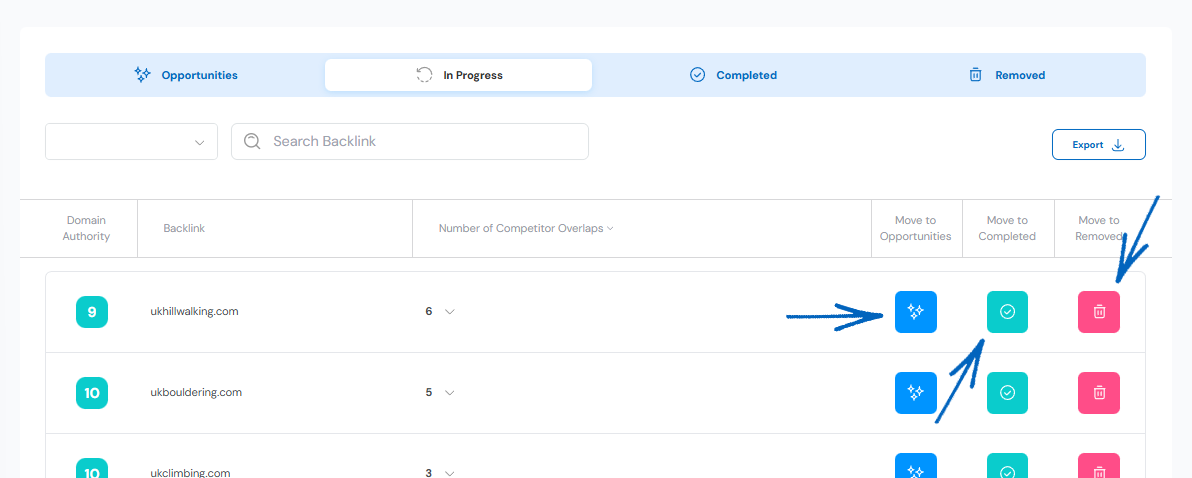
[tips] Remember to keep notes on your spreadsheet with details of any responses. This will help you stay consistent during your email outreach. [/tips]
[more]
[/more]
[contact]If you need our help with your EKM online shop, contact the Customer Support Team, who can point you in the right direction. Our opening hours are 9 am - 5.30 pm Monday to Friday, for telephone calls, live chats, and emails. Outside of these hours, you can leave a message for us in the live chat window or email support@ekm.com, and we will answer as soon as possible. If you'd like to suggest a feature or an upgrade on any of the EKM platforms, please let us know on the EKM Suggestions Board. [/contact]